Islamabad, May 26: Economic policy experts have underscored the need for Pakistan’s Federal Budget 2025-26 to align with long-term developmental objectives under the Uraan Pakistan five-year plan. They stressed that beyond short-term economic relief, structural reforms and political stability are essential for sustainable progress, investor confidence, and economic resilience.
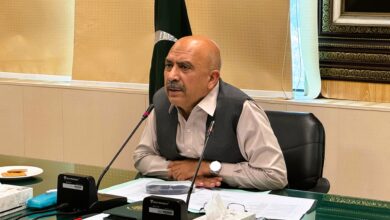
These insights were shared at a seminar titled Federal Budget 2025-26: Strategic Priorities under Uraan Pakistan and the Shadow of Pakistan-India Tensions, hosted by the Institute of Policy Studies (IPS), Islamabad. Panelists included Dr. Waqar Masood Khan, former federal secretary, Ministry of Finance; Sakib Sherani, former principal economic advisor to the Government of Pakistan; Zafar ul Hassan Almas, former joint chief economist, Ministry of Planning, Development & Special Initiatives; and Khalid Rahman, chairman, IPS.
Experts highlighted that Pakistan has undergone 14 IMF programs since 1988, yet continues to grapple with economic instability due to the absence of structural reforms. While acknowledging recent positive trends—such as controlled inflation, a stable balance of payments, currency strengthening, and stock market recovery—they cautioned that these improvements are based on short-term measures rather than lasting policy shifts.
Excessive reliance on annual budget cycles, they argued, diverts attention from long-term strategic planning. A 5- to 10-year economic vision is vital to create a comprehensive development roadmap, yet geopolitical challenges—especially Pakistan-India tensions—often push budgetary priorities toward immediate needs rather than sustainable reforms.
The experts urged the government to focus on export-led growth, proposing incentives and a business-friendly regulatory environment. Achieving 4–5% economic growth within IMF constraints, they noted, is feasible but requires significant structural shifts, including pension system reforms and efforts to boost the IT sector, environmental sustainability, and climate resilience.
Despite the ambitious framework of Uraan Pakistan, the experts pointed out that its implementation remains lacking. They urged policymakers to effectively integrate its vision into the upcoming budget, using it as a tool to increase Pakistan’s export-to-GDP ratio and advance technological innovation and green energy solutions.
In closing, Khalid Rahman emphasized that economic instability is deeply tied to political economy challenges. He stressed the need for policy continuity across successive governments to ensure investor trust and sustainable development. While Pakistan has made strides in economic stability, he warned that short-term growth must translate into meaningful long-term development to address the needs of the broader population.
Experts also highlighted the crucial role of the private sector in shaping Pakistan’s future economic and social well-being, calling for collaborative efforts across industries and institutions to sustain growth beyond government-led initiatives.
#FederalBudget2025 #EconomicStability #UraanPakistan #LongTermGrowth #StrategicPlanning #PakistanEconomy #IMFProgram #InvestorConfidence #ExportBoost #ClimateResilience