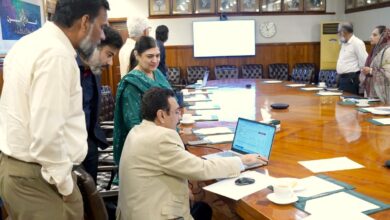
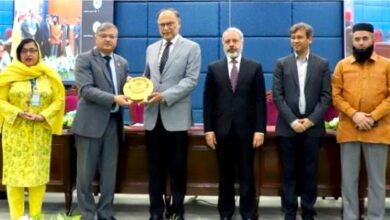
Islamabad – A delegation comprising participants of the Postdoctoral Research Fellowship Programme at the Faculty of Education, International Islamic University Islamabad (IIUI), visited the headquarters of the National Book Foundation (NBF) in Islamabad. On this occasion, the delegation was informed about the Foundation’s various sections, publishing activities, efforts to promote reading, and academic and cultural services. The purpose of the visit was to understand NBF’s role in promoting books, research, scholarly publishing and educational development in Pakistan.

The delegation included Dr M. Afzal, Chairman, Sameem Orphan Care Foundation; Dr Fayyaz A. Shaheen, Chairperson, Hamdard University, Karachi; Dr Mubashir Jamil, Assistant Professor, Bahauddin Zakariya University, Multan; Dr Fauzia Ajmal, In-charge Academic Affairs, International Islamic University Islamabad; Dr Fahmida Maqsood, Assistant Professor, International Islamic University Islamabad; and Dr Farah Latif Naz, Assistant Professor, Bahauddin Zakariya University, Multan. On behalf of the National Book Foundation, Dr Shahla Saeed, Rehan Siddiqui, Muhammad Naeem Khan, Asad Rasool Nagrah, Sahiba Jamro, Ayesha Qamar, Aazia Bibi, Qamar Saeed, Taskeen Arshad, Raja Aftab Ahmad and Muhammad Shahid Dhareja welcomed the guests and guided them during the visit.

Dr Shahla Saeed briefed the delegation on the Foundation’s establishment, aims and objectives, academic and literary services, and efforts to publish and promote books. She informed them that the National Book Foundation was established in 1972 under an Act of Parliament and operates as an educational and service-orientated institution under the Ministry of Federal Education and Professional Training, Government of Pakistan.
She stated that NBF’s primary objective is to provide quality books to students, teachers, researchers and general readers at affordable prices, promote the habit of reading, and strengthen society’s connection with knowledge and literature. The Foundation is actively engaged in publishing and distributing textbooks, general-interest research, literary, historical, religious and useful children’s books, while also encouraging authors, promoting scholarly material and making books available in different languages.
During the briefing, the delegation was informed that the National Book Foundation organises book fairs, literary events, discussions, meetings with authors, book launches, writing competitions and storytelling activities for children across the country. These programmes aim particularly to develop an interest in reading among students and young people, promote creative abilities, and disseminate knowledge and awareness through books. The delegation showed interest in these activities and exchanged views on the provision of quality books to educational institutions’ libraries, links between academic and research institutions, and opportunities to promote reading.
The delegation was informed that, under the leadership of NBF Managing Director Dr Kamran Jahangir, special attention is being given to promoting books, publishing quality titles and, particularly, cultivating a reading habit among children. In line with this vision, the National Book Museum and the NBF Book Shop have been renovated. Measures have also been taken to preserve the rare and valuable academic, historical and cultural artefacts housed in the museum and present them more effectively. The purpose of these efforts is not only to make the museum a modern and attractive academic and cultural centre but also to facilitate readers’ access to books and bring the younger generation closer to books and reading.
Following the briefing, the delegation took a guided tour of the National Book Museum, where the participants were informed about its historical, academic and cultural artefacts. The delegation expressed keen interest in ancient and rare Quranic manuscripts, examples of calligraphy, book models, special sections dedicated to Pakistan’s languages, and exhibitions relating to prominent national and literary figures. The participants viewed the golden statues of Allama Iqbal, Quaid-e-Azam Muhammad Ali Jinnah, Faiz Ahmed Faiz, Hafeez Jalandhari, Ahmad Nadeem Qasmi and Saadat Hasan Manto, along with other distinctive exhibits in the museum. Miniature trucks and trains loaded with books, framed Quranic pages, the Pillar of Autographs and other book-themed exhibits also attracted the delegation’s attention.
The academics described the National Book Museum as an interesting combination of book history, the art of calligraphy, intellectual heritage and cultural traditions. They stated that such centres play an important role in familiarising the younger generation with the importance of books and promoting reading habits. They also appreciated the museum’s new additions, which have further enhanced its academic and cultural appeal.

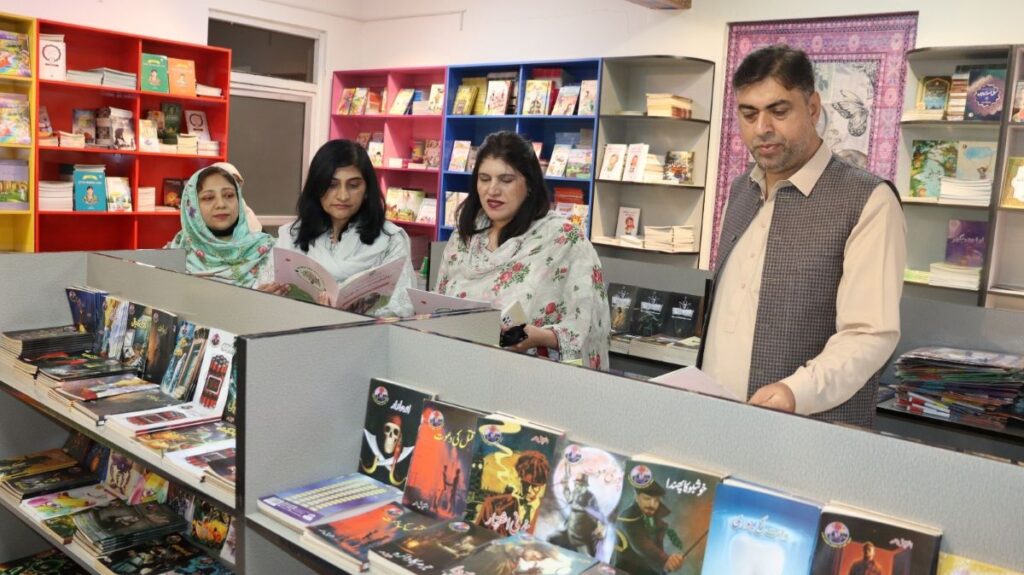
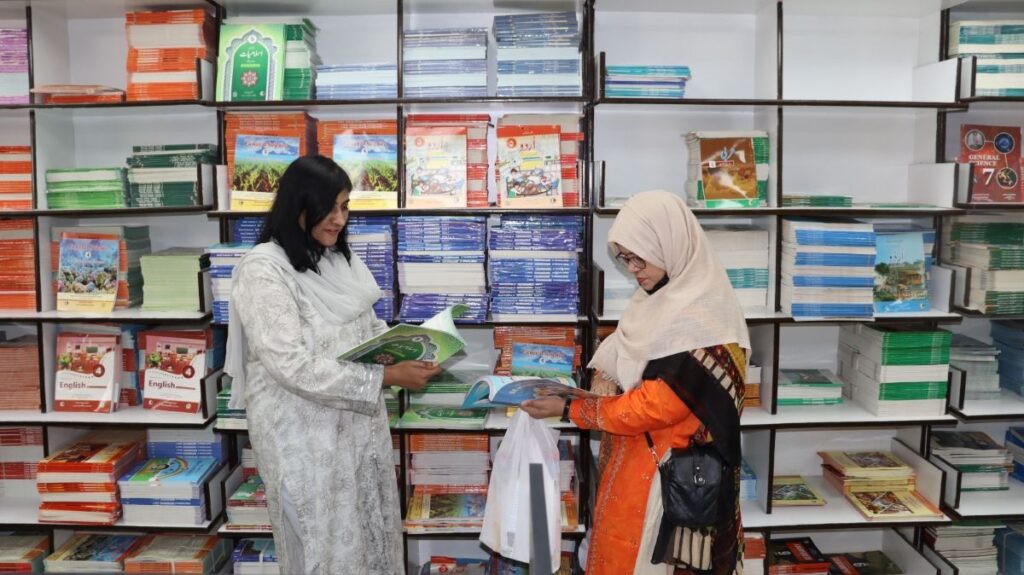
Later, the delegation visited NBF’s Indonesian Corner and showed interest in its introduction to different cultures and scholarly traditions. Reviewing the collection available at the National Book Foundation’s Book Shop, the participants appreciated the availability of translations of the Holy Quran, religious and Seerah books, history, literature, poetry, philosophy, general knowledge and interesting and educational books for children. They stated that the availability of quality books on different subjects at affordable prices under one roof makes the selection and purchase of books for educational institutions’ libraries easier. They appreciated NBF’s efforts to improve readers’ access to quality scholarly material and promote a culture of reading.
On this occasion, the delegation members also appreciated NBF Managing Director Dr Kamran Jahangir’s effective administrative strategy and efforts to advance the Foundation’s activities in an organised manner. They stated that the publication and provision of quality books, along with the continuation of academic and literary activities, are important for educational and cultural development.
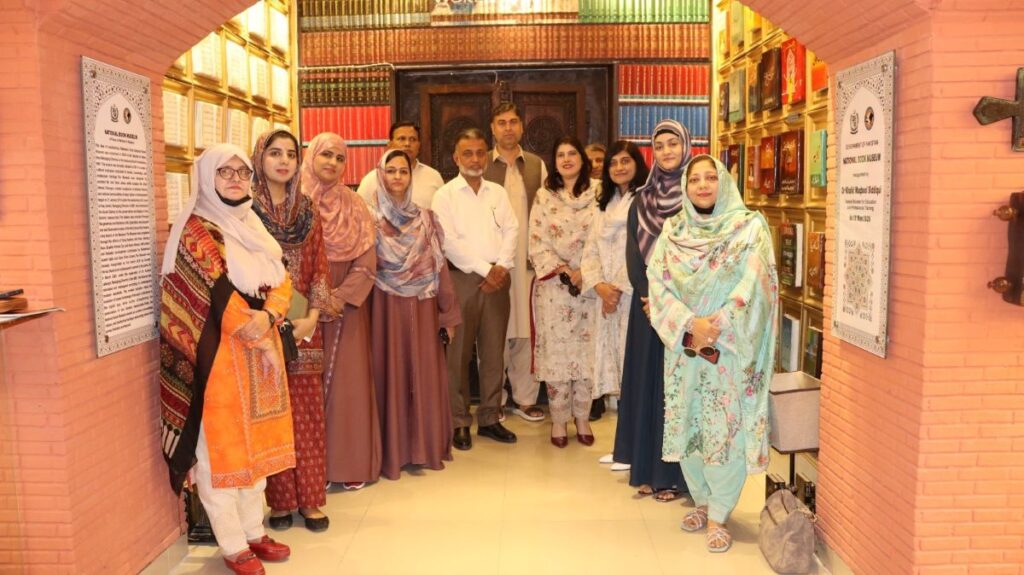
At the conclusion of the visit, the delegation thanked the National Book Foundation for its hospitality and informative guidance. The participants expressed the hope that such links among universities, researchers and national academic institutions would contribute to research, education, appreciation of books and the promotion of reading.